Research
Research
I'm a Principal Research Fellow at the UCL Energy Institute and a researcher co-investigator in the Energy Demand Research Centre, where I work in the flexibility theme.
My research asks who is able to benefit from a flexible, low-carbon energy system, on what terms, and how developments in AI might come to affect this. Most of it falls into the four strands below. Everything on this page comes from my work at UCL.
Flexibility and fairness
Demand flexibility means changing when we use electricity, so that more of it is used when power is cheap, clean or plentiful. I'm interested in the households who are increasingly being asked to provide that flexibility: which of them are able to, who gains from it, and who ends up carrying the costs.
With Gareth Powells I co-developed the concepts of flexibility capital and flexibility justice, to describe how unevenly the ability to flex, and the rewards for doing it, are spread. Earlier work, including my PhD, looked at how people respond to time-of-use tariffs, automation and direct load control. I also wrote about energy services, meaning the things people want energy for, such as warmth and light, rather than energy itself.
Key papers
- Flexibility Capital and Flexibility Justice in Smart Energy Systems
- Just flexibility?
- Energy services: A conceptual review
- Public acceptability of domestic demand-side response in Great Britain: The role of automation and direct load control
- Consumer demand for time of use electricity tariffs: A systematized review of the empirical evidence
- Demand response beyond the numbers: A critical reappraisal of flexibility in two United Kingdom field trials
- Smart energy must address enshittification risks
- Conceptualising spatial demand flexibility: an introduction
Related work on this site
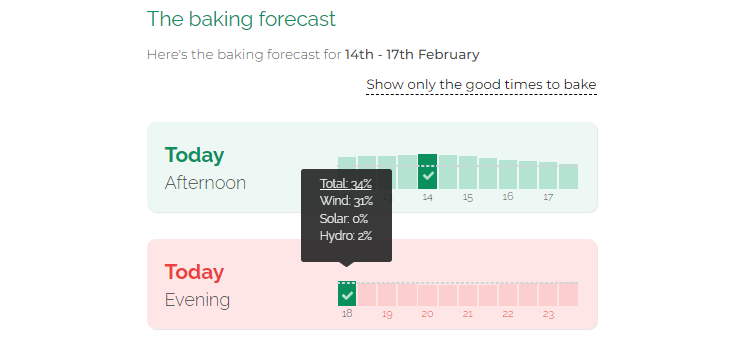
- Should I Bake?Research
- Grid MusicPersonal projects
AI agents and energy
More of my recent work is about AI agents that act for people in the energy system, for example deciding when to charge a car or run a heat pump. This includes co-design studies of preference agents built on large language models, and tools for finding out what different people in a household want and working out a plan they can all live with. I've also looked at how well language models can help with energy research.
Key papers
- Keep people in the loop: co-designing personal preference agents for energy flexibility
- Living with a Chatbot: Supporting Energy Communities with a Conversational Coordination Interface
- Energy Social Surveys Replicated with Large Language Model Agents
Related work on this site
- FragletsPersonal projects
Local and peer-to-peer energy
Peer-to-peer trading, having more than one electricity supplier, community energy and smart local energy systems would all change who people buy electricity from, and how. I've used reviews, expert interviews and games to find out what people want from these arrangements, and who might get left out.
Key papers
- Peer-to-peer electricity trading and the sharing economy: social, markets and regulatory perspectives
- Defining characteristics of peer-to-peer energy trading, transactive energy, and community self-consumption: A review of literature and expert perspectives
- Pricing decisions in peer-to-peer and prosumer-centred electricity markets: Experimental analysis in Germany and the United Kingdom
- Two energy suppliers are better than one: Survey experiments on consumer engagement with local energy in GB
- Consumer Demand for Blockchain-Enabled Peer-to-Peer Electricity Trading in the United Kingdom: An online survey experiment
- How do we want to buy and sell electricity? Contrasting preferences from the United Kingdom and South Korea
- Smart Local Energy Systems (SLES): A framework for exploring transition, context, and impacts
- Anticipating distributional impacts of peer-to-peer energy trading: Inference from a realist review of evidence on Airbnb
- SolarClub: Supporting Renewable Energy Communities through an Interactive Coordination System
Related work on this site
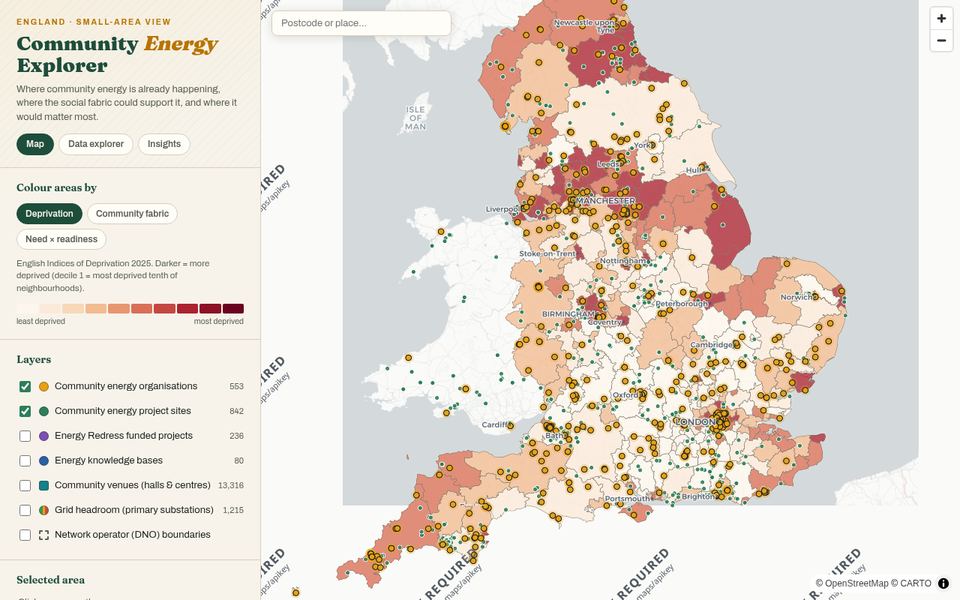
- Community Energy ExplorerResearch
Methods and open research
I'm also interested in how energy research gets done. I use and write about realist approaches to evidence, which ask what works, for whom and in what circumstances. I've worked on guidance for transparent and reproducible energy research, on the case for open science, and on using games and play in research.
Key papers
- Realist approaches in energy research to support faster and fairer climate action
- Improving energy research practices: guidance for transparency, reproducibility and quality
- Open science and the climate crisis
- The Economic Impacts of Open Science: A Rapid Evidence Assessment
- Validity of energy social research during and after COVID-19: challenges, considerations, and responses
- Make fun of your research